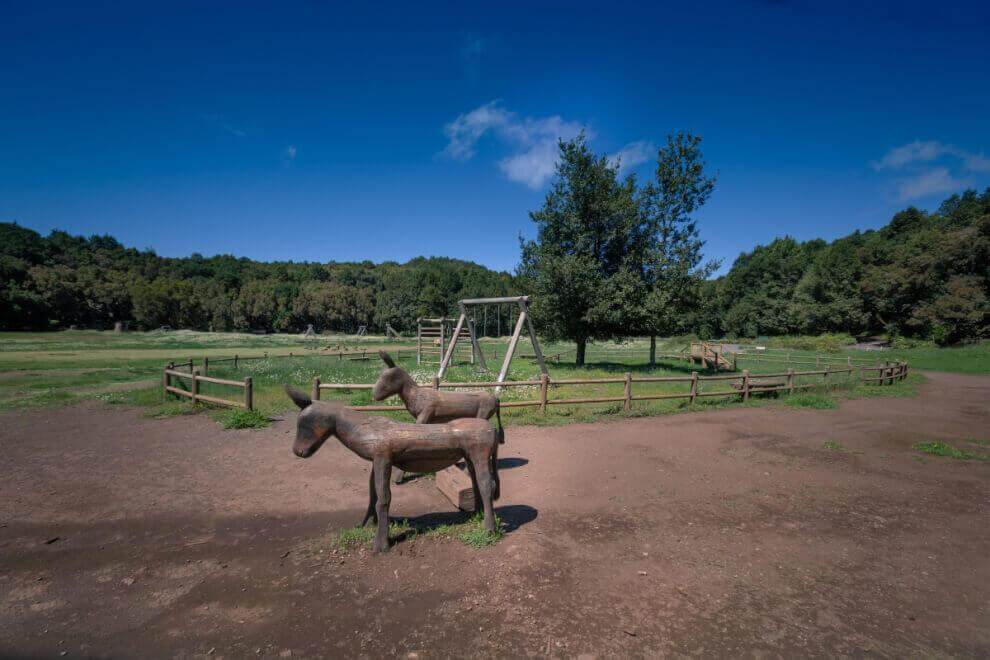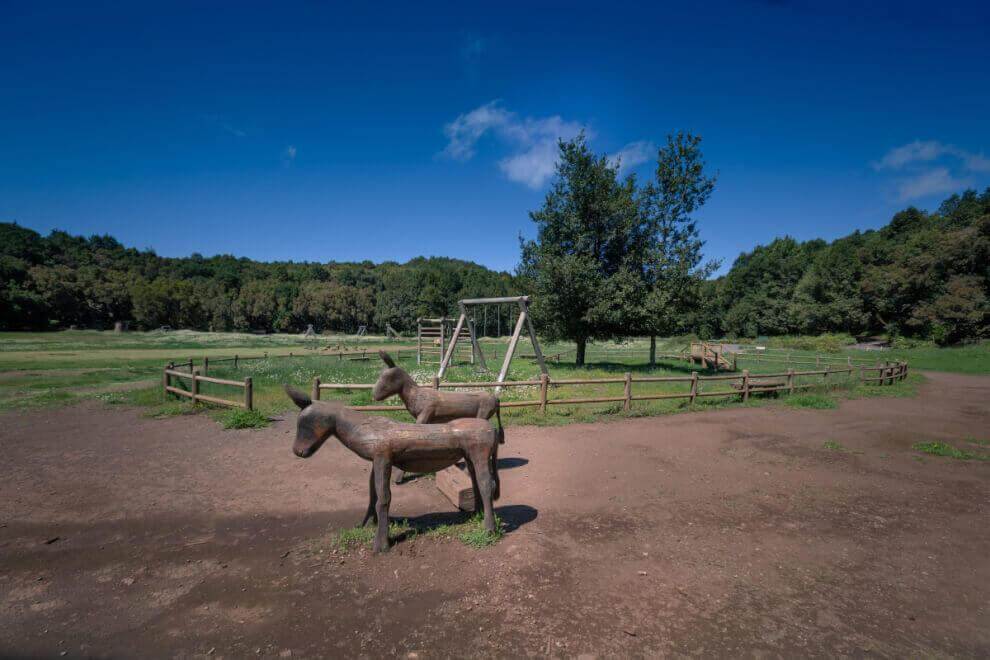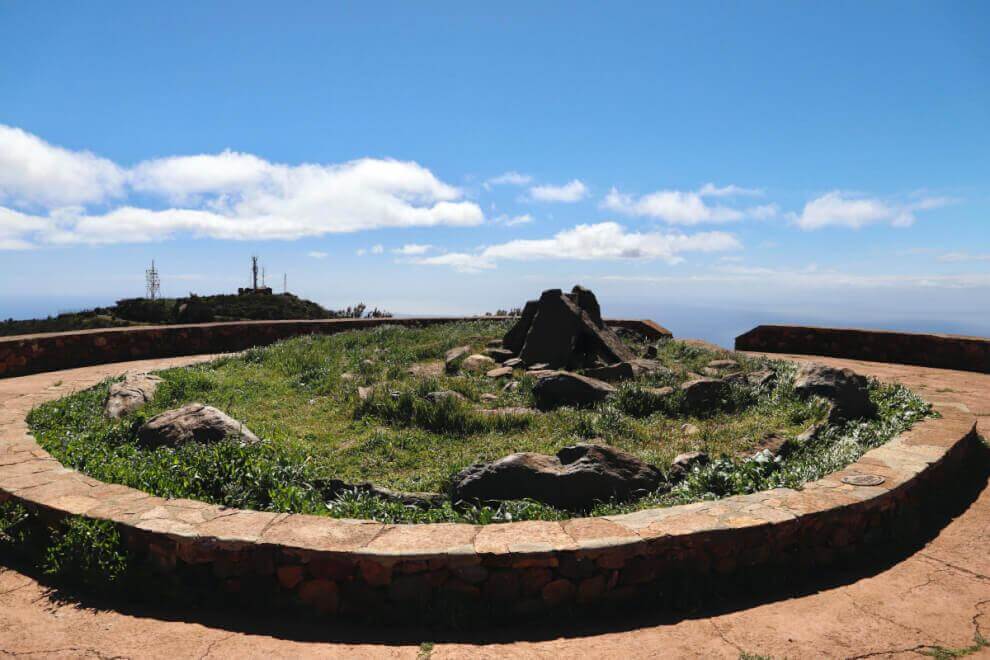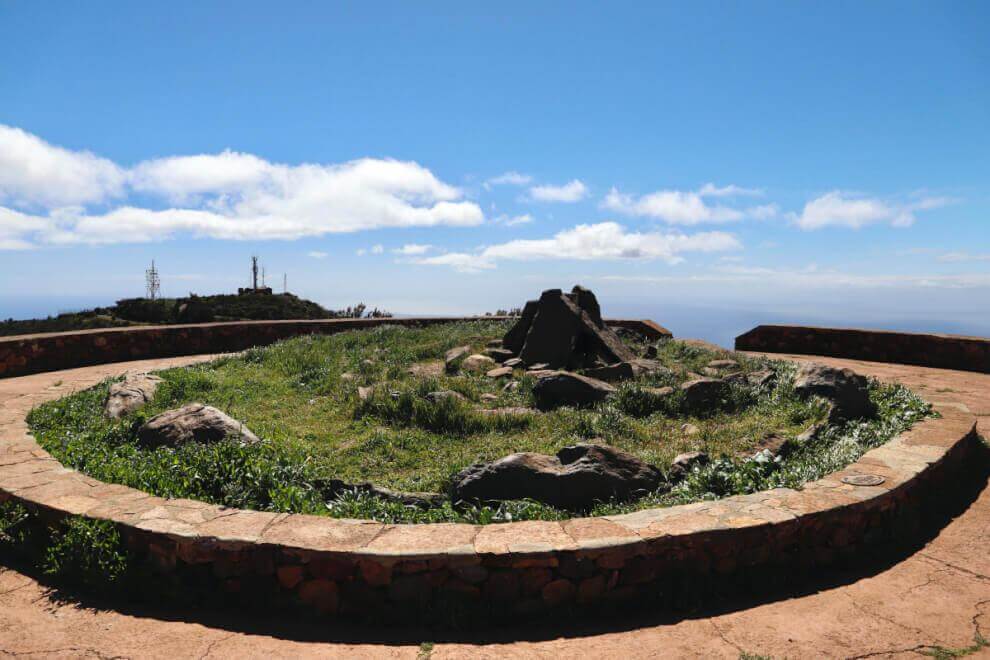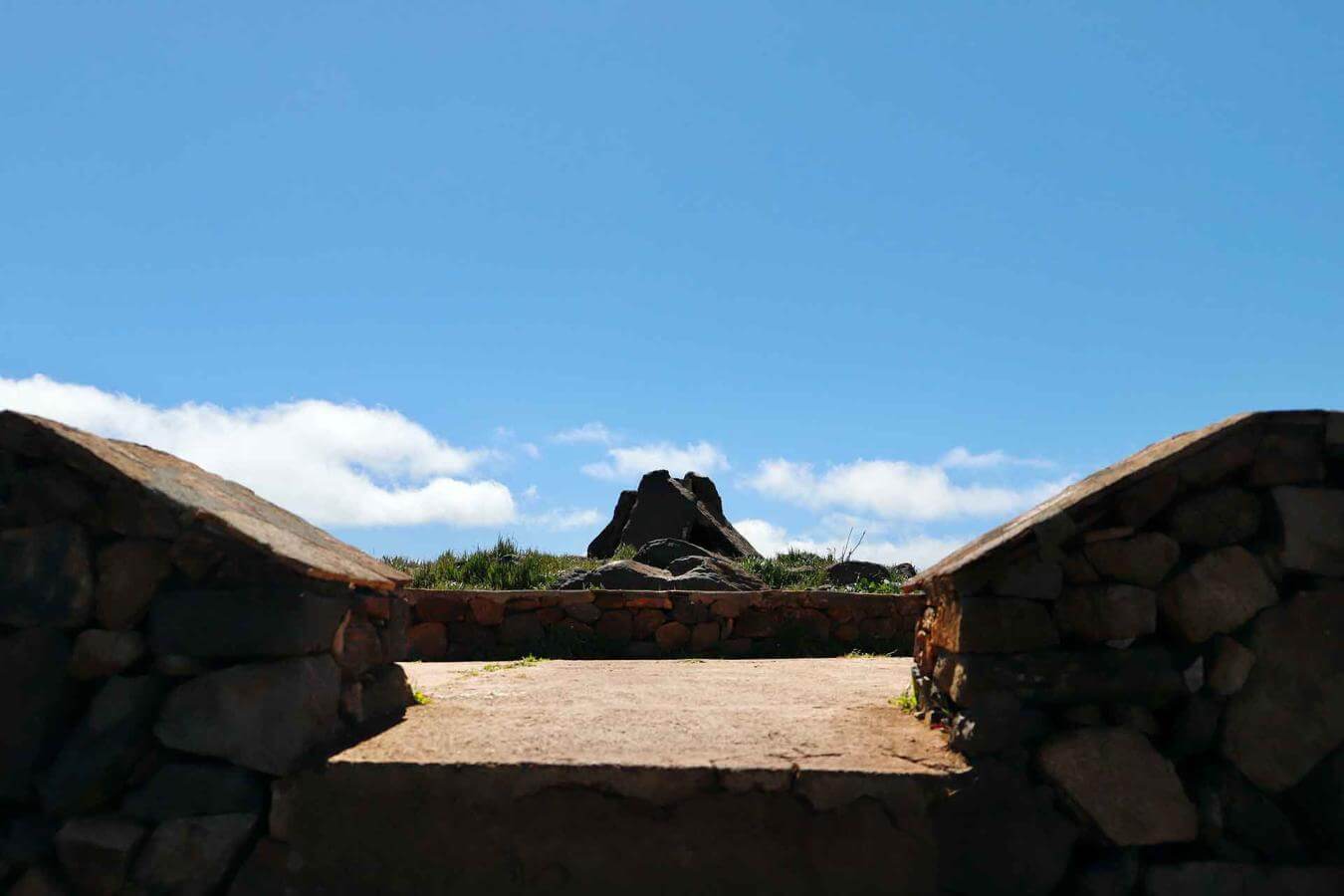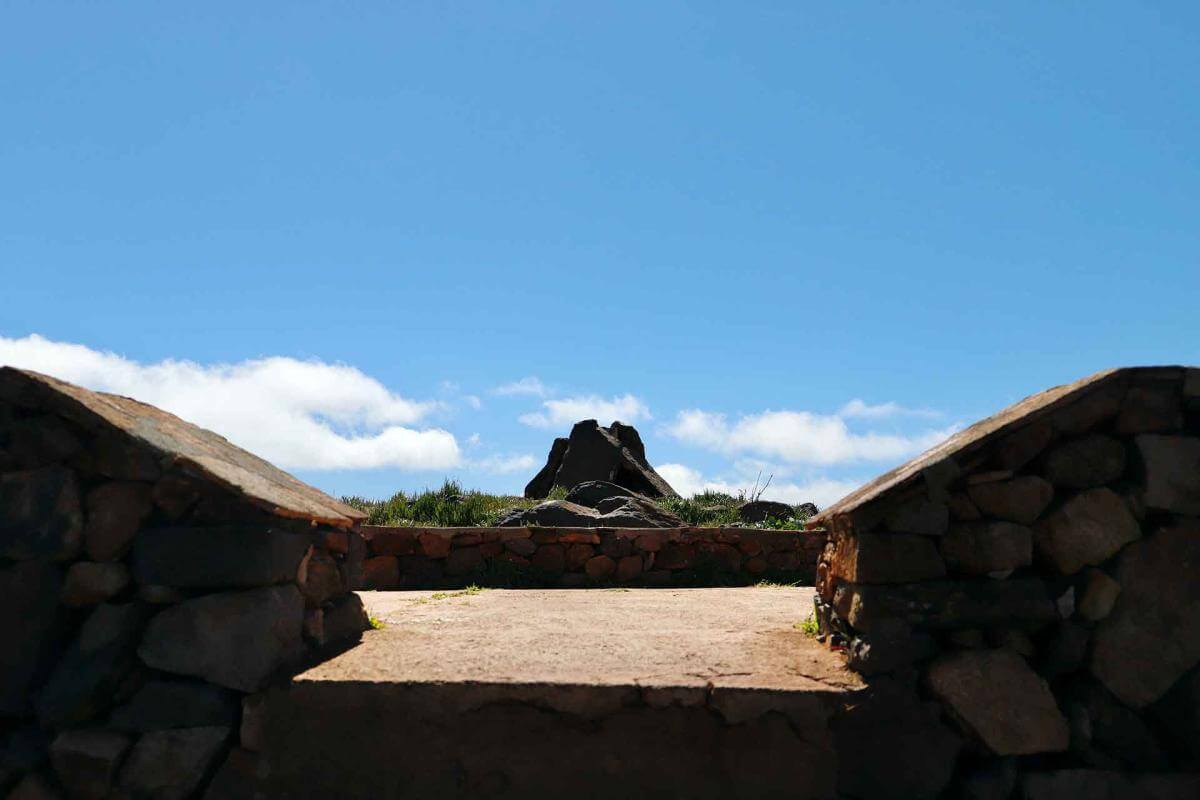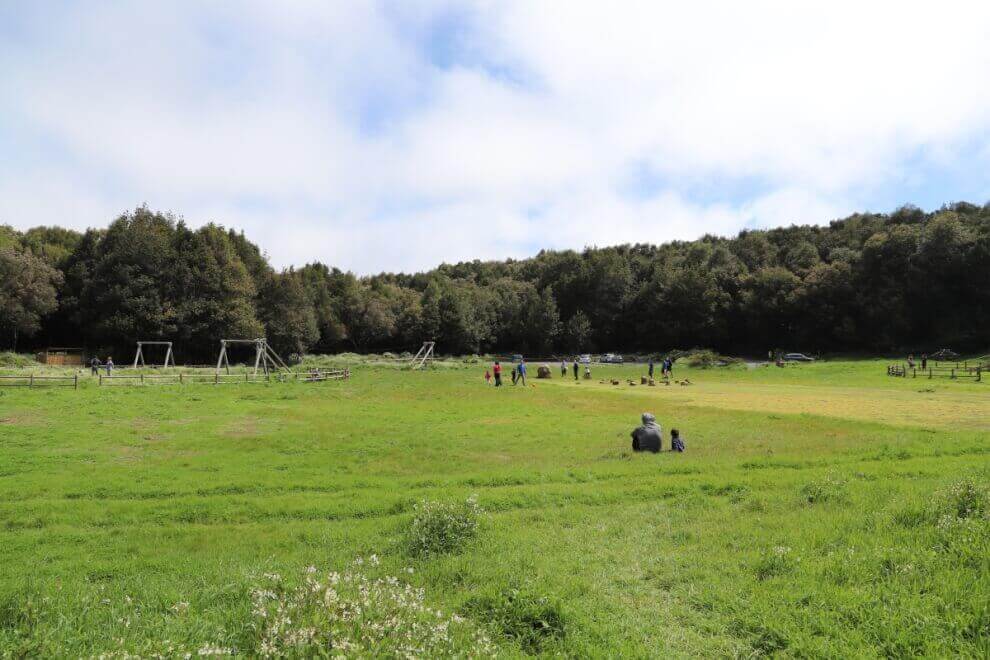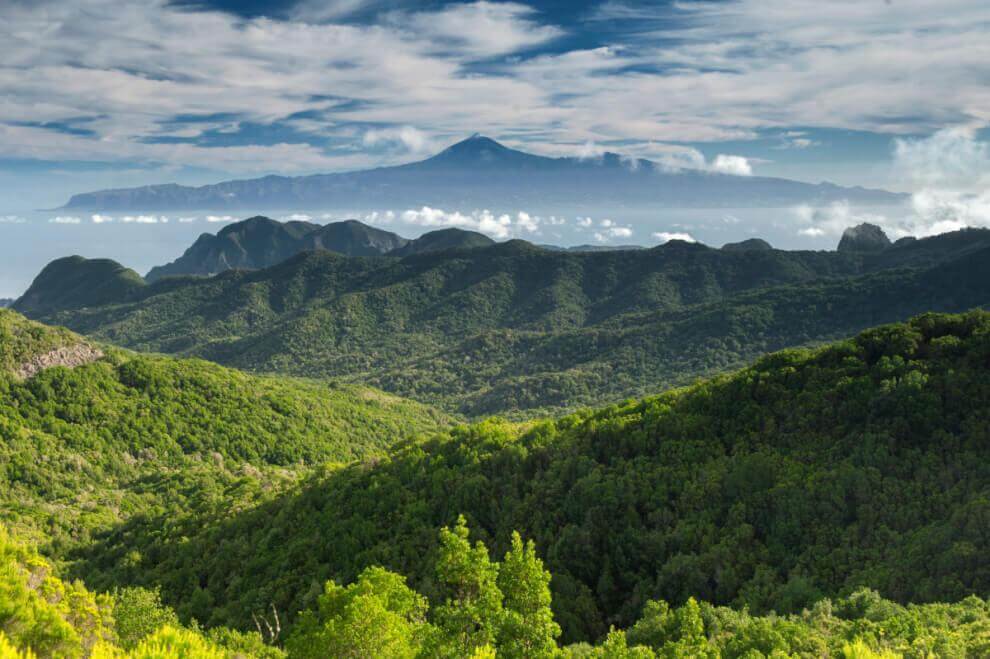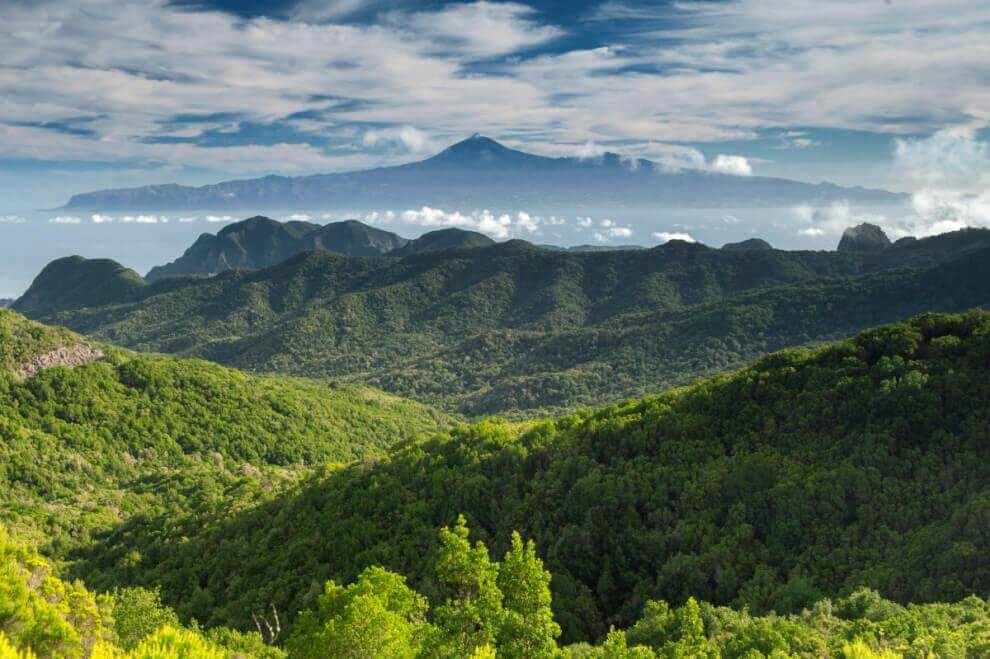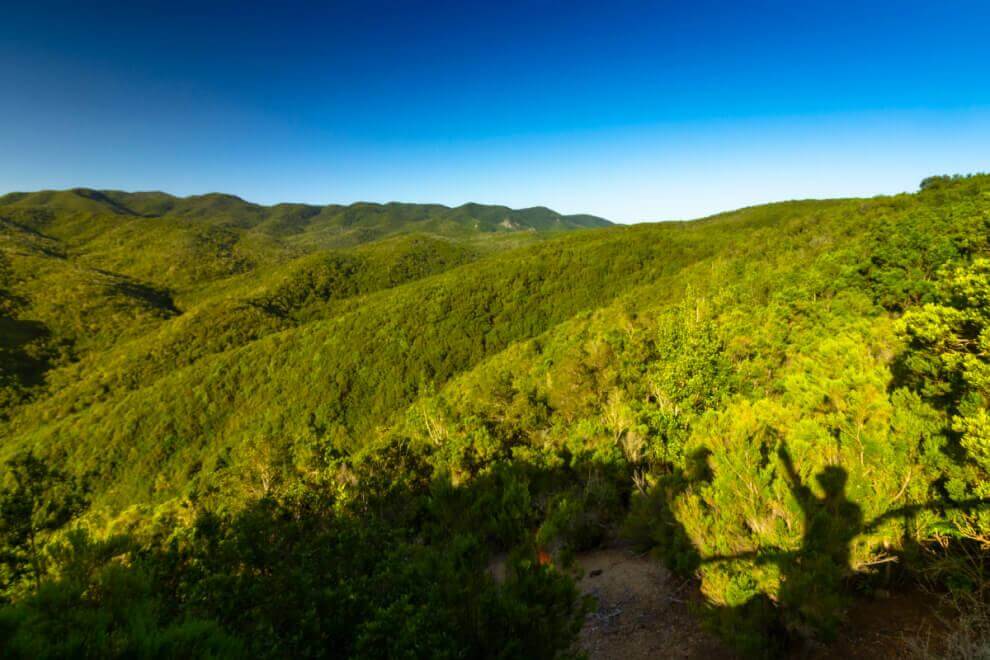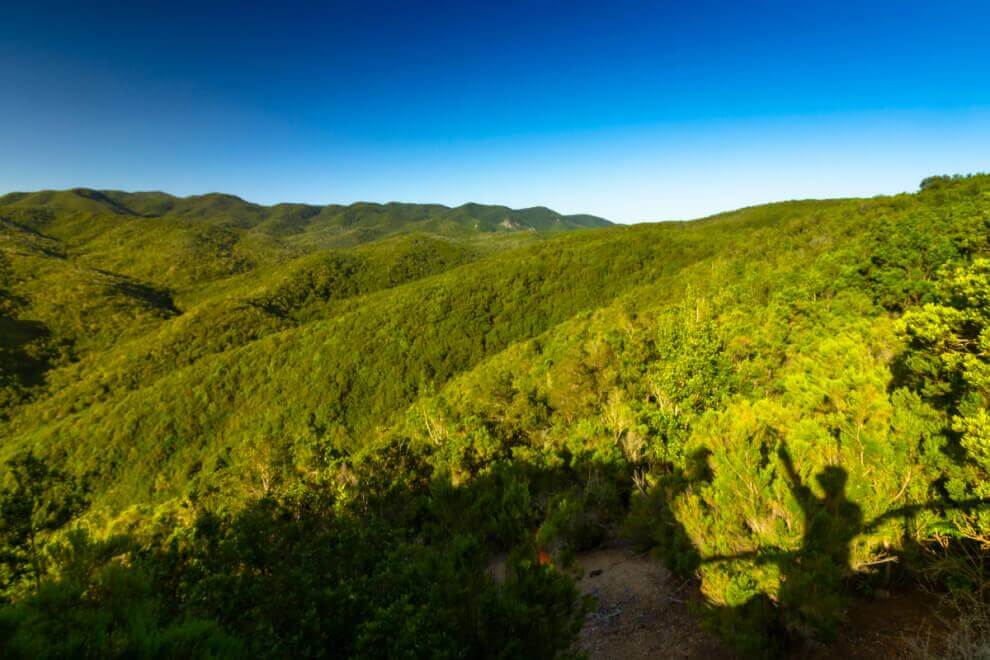


This circular itinerary offers one of the most interesting combinations within Garajonay National Park: the opportunity to start from the popular La Laguna Grande recreational area and ascend to Alto de Garajonay, the highest point on the island at 1,487 metres, enjoying along the way a remarkable diversity of landscapes and plant formations. The first section follows an old mule track, still paved in the steepest areas, which gradually climbs through a tree fayal–brezal forest. This type of woodland is characteristic of the southern slope of the Park, where the influence of mist is lower and vegetation has adapted to drier conditions. Tall heaths, light-trunked fayas, and open undergrowth accompany visitors along this initial stage. The trail then crosses an area where large fallen eucalyptus trunks can be seen—remnants of the ecological restoration process carried out after the 2012 wildfire, aimed at restoring the Park’s original vegetation and removing introduced species. These remains, now integrated into the landscape, help illustrate the ecosystem’s recent evolution. Upon reaching the Park boundary, the landscape opens toward mid-altitude areas with vineyards, offering a striking contrast between the protected monteverde forest and the traditional agricultural landscape. From here, the route connects with a branch track that re-enters the heart of the forest, crossing a reforested pine woodland and a small grove of chestnut trees—an introduced species traditionally used by rural communities. In the final sections of the ascent, several fern-covered embankments stand out, forming vivid green walls, especially during humid periods. Shortly before reaching the summit, magnificent views of Fortaleza de Cherelepi, a vegetation-covered volcanic dome dominating the island’s skyline, can be enjoyed. From the summit of Alto de Garajonay, visitors can take in one of the finest natural viewpoints in the Canary Islands, with views that on clear days extend to several neighbouring islands. The descent back to La Laguna Grande completes the itinerary, allowing once again the enjoyment of the mosaic of environments that characterises this central area of the Park.