


Birdwatching in the Canary Islands is an accessible experience for everyone. Biodiversity accompanies the traveller from the coast to the mountain peaks, turning the archipelago into a destination that surprises with its variety of landscapes and species concentrated in such a small territory.
Coastlines
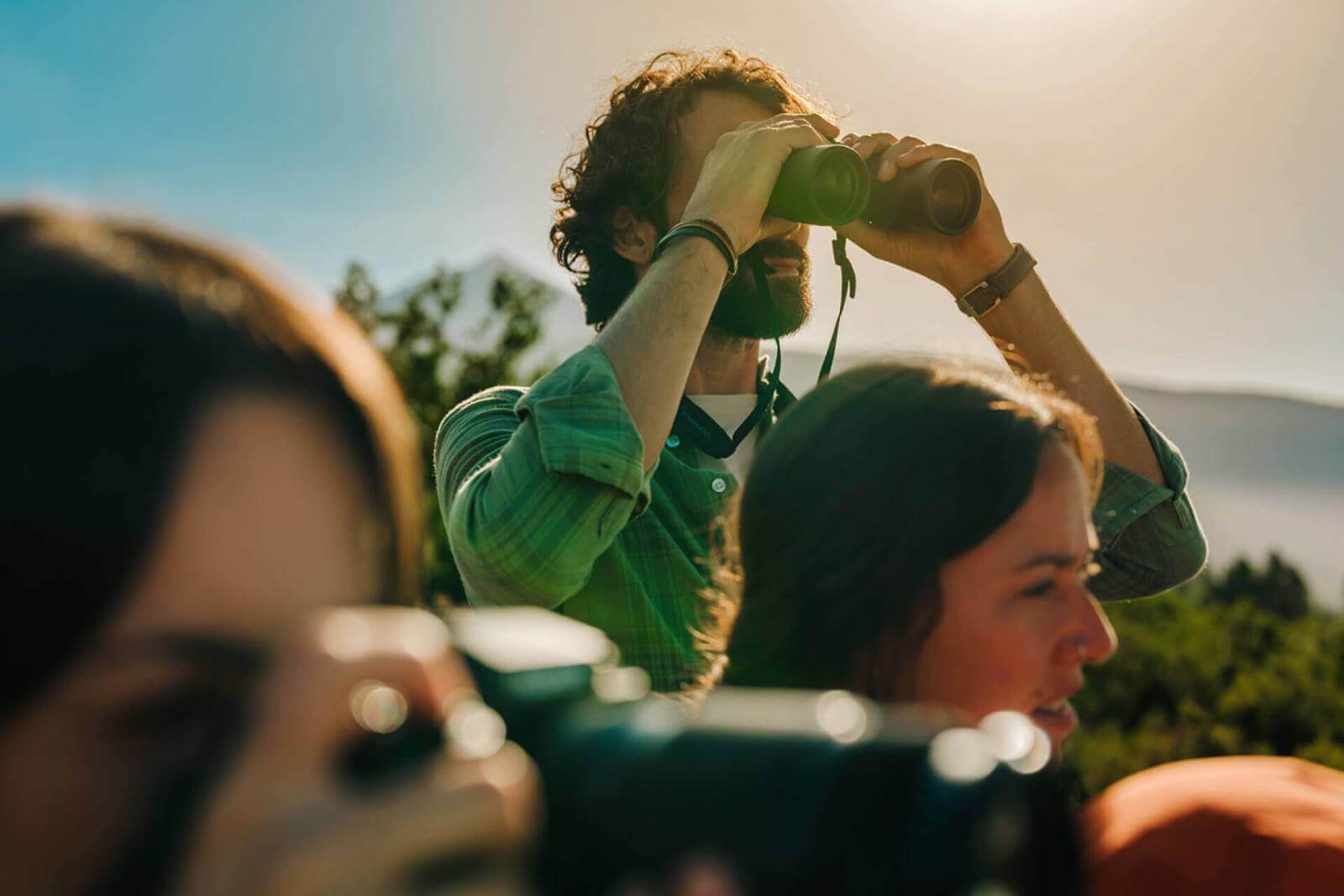
The coastal areas of the Islands host a great diversity of seabirds, some with very small populations, on a European scale. Sailing between islands in the summer, or simply observing with a telescope from capes and coastal headlands, can provide memorable sightings: the Cory’s Shearwater (Calonectris borealis), the Barolo Shearwater (Puffinus baroli) or the Manx Shearwater (Puffinus puffinus). It is also possible to observe Bulwer's Petrel (Bulweria bulwerii) and several species of storm petrels, such as the Band-rumped Storm Petrel (Oceanodroma castro), the European Storm Petrel (Hydrobates pelagicus), or the rare White-faced Storm Petrel (Pelagodroma marina), which only breeds on the islets north of Lanzarote.
In recent years, the warming and “tropicalisation” of the archipelago’s waters have favoured an increasing presence of tropical seabirds, including the Red-billed Tropicbird (Phaethon aethereus), which has recently begun breeding in El Hierro, Lanzarote and Fuerteventura.
Arid and desert zones
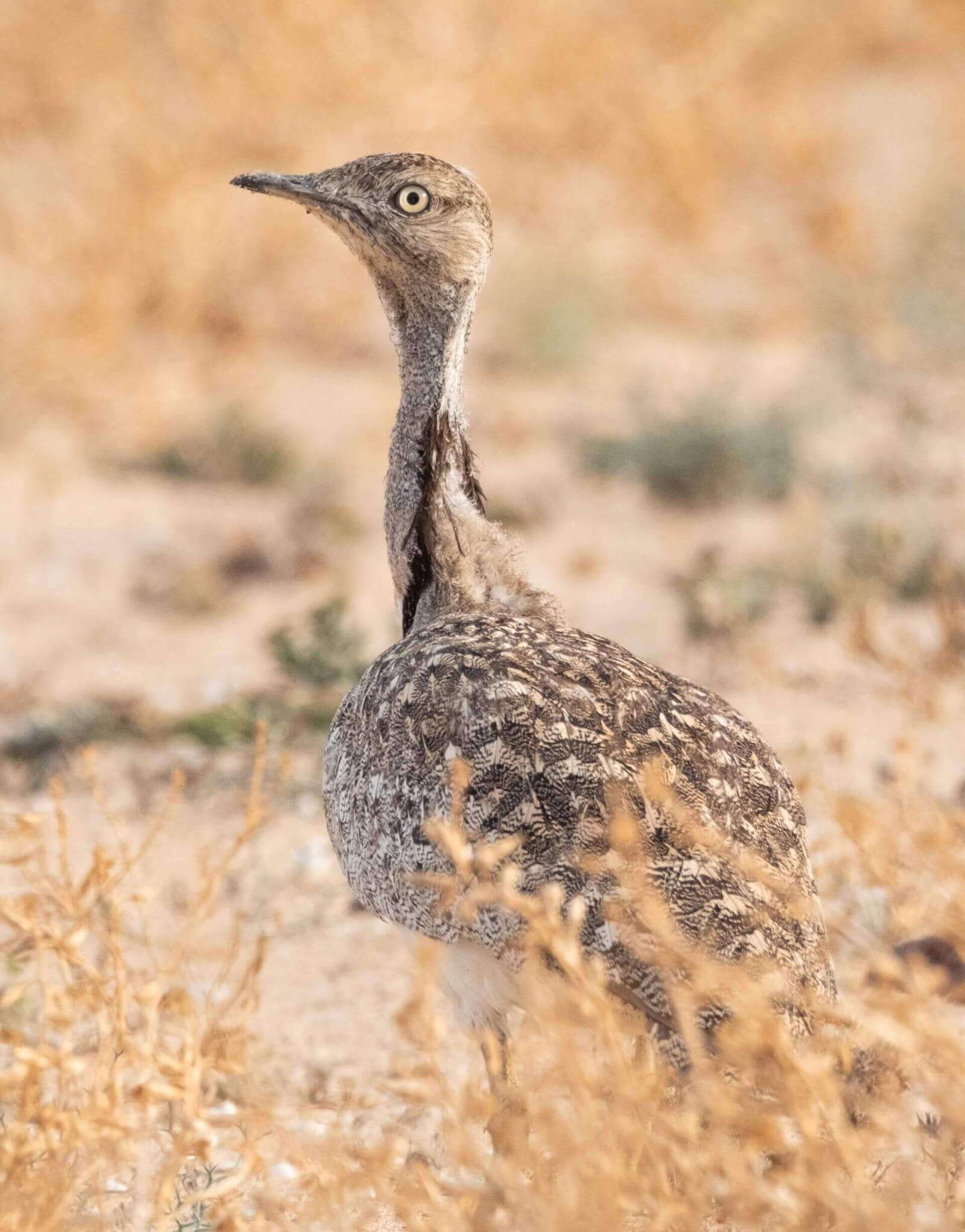
The arid zones near the coast - very characteristic of Lanzarote, Fuerteventura and the southern slopes of Gran Canaria - form wide stony or sandy plains, with sparse vegetation, minimal rainfall and strong sunlight. These almost desert-like landscapes are home to some of the most emblematic birds of these environments: the Canarian Houbara (Chlamydotis undulata), the Cream-coloured Courser (Cursorius cursor), the Trumpeter Finch (Bucanetes githagineus), the Eurasian Stone-curlew (Burhinus oedicnemus), and the Berthelot's Pipit (Anthus berthelotii).
The best areas to observe these birds - many of which are extraordinarily well-camouflaged - are the plains of Tindaya and the sands of Jable de Jandía in Fuerteventura, as well as the Plains of Famara in Lanzarote.
Ravines
Medium-sized and large ravines have shaped the Islands’ topography and harbour species of great interest to birdwatchers. On Fuerteventura, the ravines of La Torre and Río Cabras are ideal for observing the Ruddy Shelduck (Tadorna ferruginea), the Laughing Dove (Streptopelia senegalensis), and the rare Canary Islands Stonechat (Saxicola dacotiae), an exclusive endemic species of the island.
On Lanzarote, the ravine of Tabayesco provides refuge, among the nearby crops, for some of the few pairs of the eastern subspecies of the Tenerife Blue Tit (Cyanistes teneriffae degener).
On Tenerife, the ravines of the Teno massif host, on their huge rock walls, several pairs of the Barbary Falcon (Falco peregrinoides), a North African variety of the Peregrine Falcon (Falco peregrinus) found from Pakistan to the Canary Islands.
Mid-altitude zones and thermophilic forests
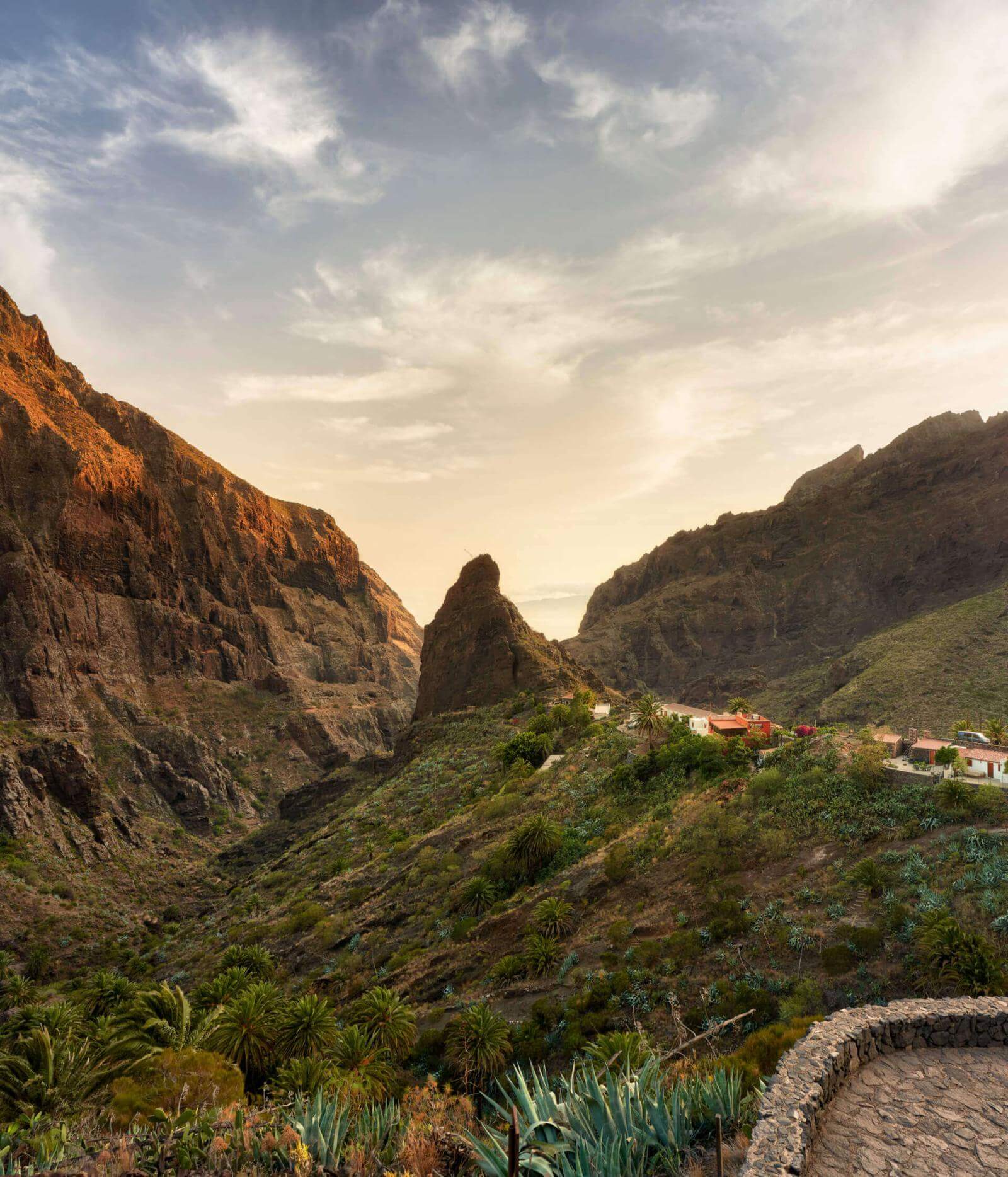
The mid-altitude zones of the Islands were once covered by dense forests of Canary Islands dragon trees (Dracaena draco), Canary Island date palms (Phoenix canariensis), sabinas (Juniperus turbinata) and various species of trees and shrubs with fleshy fruits. With the arrival of the first inhabitants, much of these forests was cut down and their lands transformed into farmland or settlements.
Today, only small fragments of thermophilic forests remain - the warm, dry formations typical of the mid-altitudes - with their best representations in Tenerife and the north of Gran Canaria. These enclaves are ideal places for observing passerines such as the Sardinian Warbler (Curruca melanocephala), the Canary Islands Chiffchaff (Phylloscopus canariensis) and the Atlantic Canary (Serinus canaria), the wild ancestor of the well-known cage bird and endemic to the Azores, Madeira and the Canary Islands.
Laurissilva forests
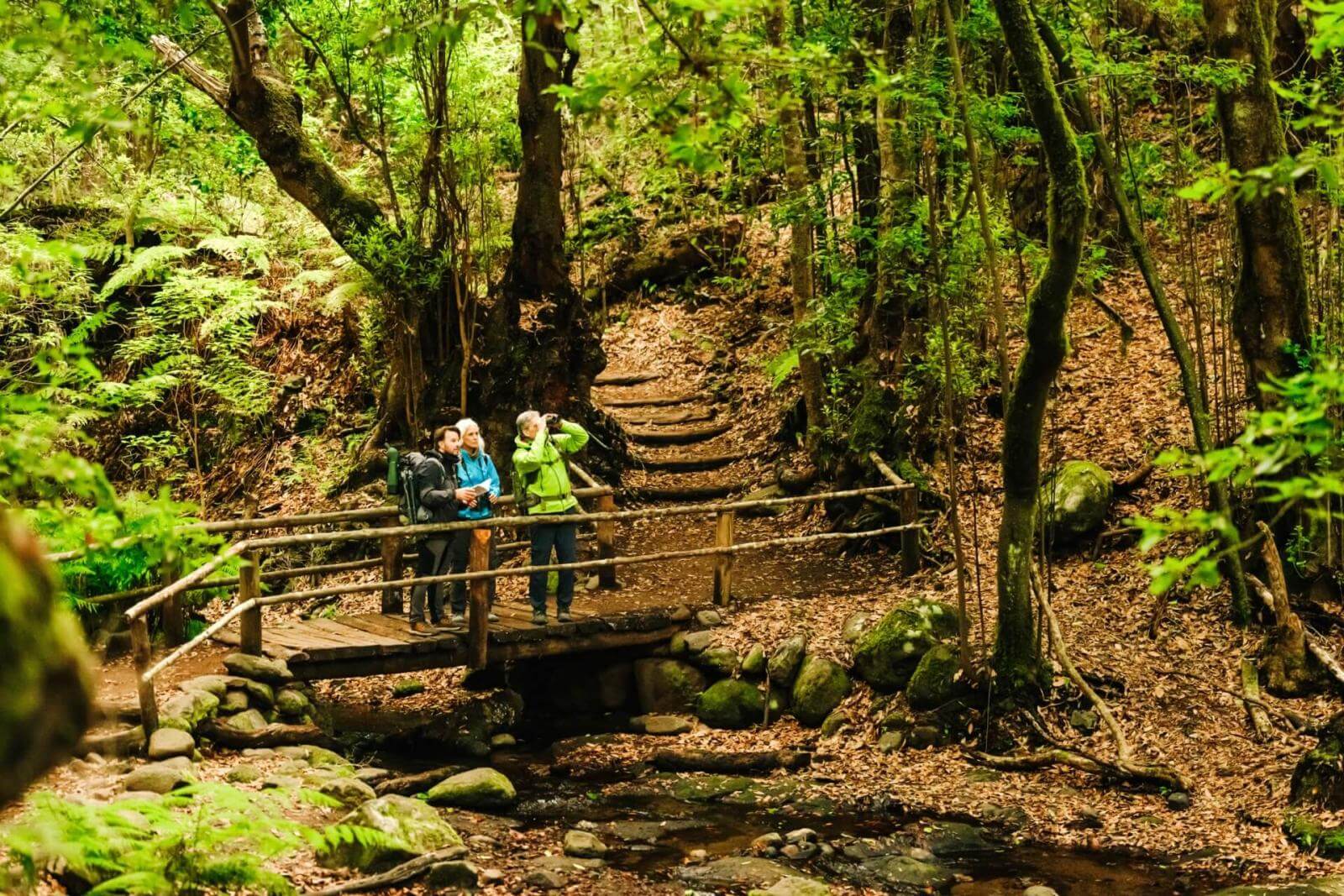
On the higher, more mountainous islands, the northern slopes are exposed to the trade winds, whose constant humidity allows the development of dense laurissilva forests with the appearance of a subtropical jungle. Garajonay National Park in La Gomera, the Teno and Anaga Rural Parks in Tenerife and the peaks of San Andrés y Sauces and Barlovento in La Palma are some of its best representations.
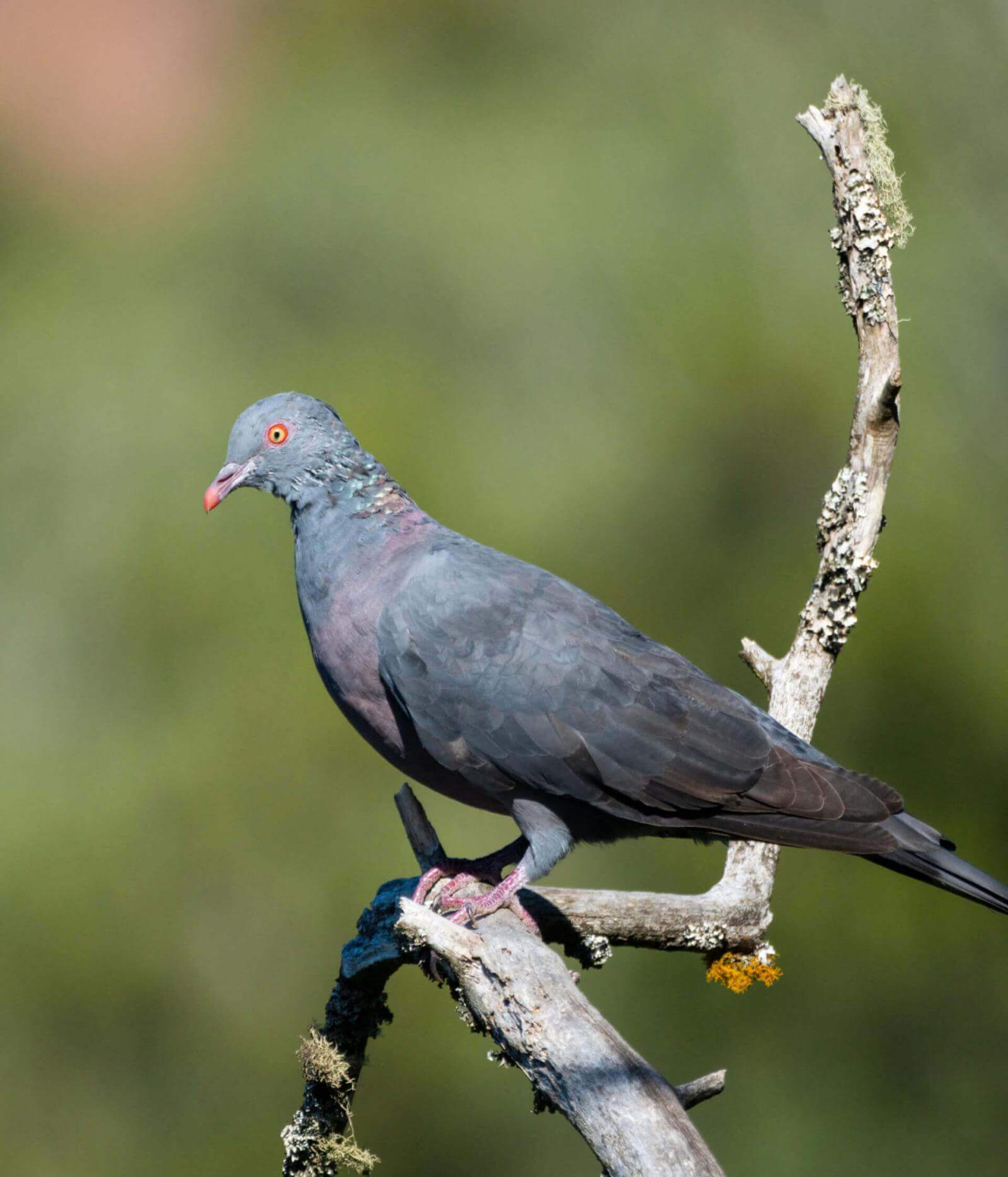
These forests constitute the habitat of unique and threatened species, such as the Laurel Pigeon (Columba junoniae) and the Bolle’s Pigeon (Columba bolli). They also harbour several passerines, including the Tenerife Goldcrest (Regulus regulus teneriffae), endemic to the island, and the Canary Islands Chaffinch (Fringilla canariensis).
Pine forests
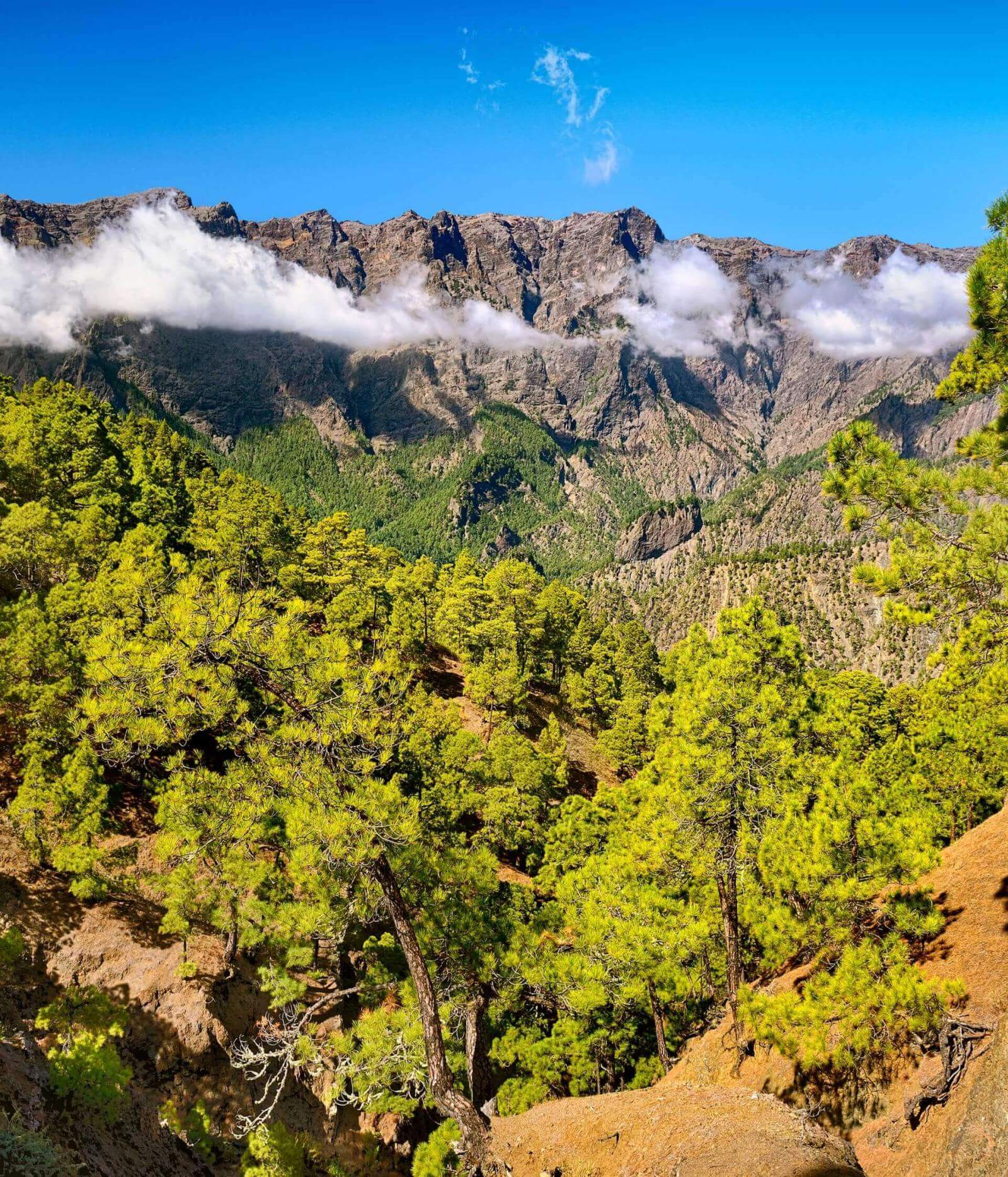
The more arid southern slopes, and the summits above a thousand metres, are the domain of the Canary Island pine (Pinus canariensis), a conifer unique to the archipelago that has evolved a bark capable of resisting fires, whether caused in the past by volcanic activity or today, by human carelessness.
The pine forest is an extreme habitat where few species survive, all of them highly adapted to cold winters and intensely dry summers. The vegetation and invertebrates native to these environments are the food source for birds as rare as the Tenerife Blue Chaffinch (Fringilla teydea) and the Gran Canaria Blue Chaffinch (Fringilla polatzeki), as well as the two subspecies of Canary Islands Great Spotted Woodpecker (Dendrocopos major) present on the Islands.
Some of the best places to observe these species are the Corona Forestal Natural Park in Tenerife and the highlands of Pajonales, Inagua and Pilancones in Gran Canaria.
High-altitude mountain
The high mountain zones are found only on Tenerife - in the Teide National Park - and on La Palma - in the Caldera de Taburiente National Park-, where altitudes exceed 2,000 metres. Here, scrublands of Teide white bloom (Spartocytisus supranubius) and Teide broom (Adenocarpus viscosus) dominate; plants capable of withstanding extreme conditions which reach their ephemeral splendour in late spring when the climate allows them to flower.
These high-altitude scrublands attract the scarce winged inhabitants of these summits and constitute a fundamental food source for large flocks of Plain Swifts (Apus unicolor).
Ten essential places for birdwatching
- Plains of Famara (Lanzarote).
- Janubio Saltworks (Lanzarote).
- Ravine of La Torre (Fuerteventura).
- Jandía Natural Park (Fuerteventura).
- Inagua Pine Forests (Gran Canaria).
- Teno Rural Park (Tenerife).
- La Orotava Pine Forests (Tenerife).
- Garajonay National Park (La Gomera).
- Ravine of Los Tilos (La Palma).
- Mencafete (El Hierro).
Tips for planning your trip
Best time of year for birdwatching
Birdwatching in the Canary Islands is possible throughout the year, though certain dates offer better opportunities depending on the type of species:
- Terrestrial nesting birds: April to June, when breeding activity is at its peak.
- Migrating seabirds: August to October, coinciding with the post-nuptial passage.
- Accidental rare birds: especially in October and November, months when arrivals of vagrant species are usually recorded.
Recommended Trip Duration
The ideal plan is a 7 to 10-day itinerary that includes the islands of Fuerteventura or Lanzarote, Gran Canaria, Tenerife and La Gomera. Combining these destinations allows you to cover all the main habitats and guarantees sightings of most species of interest.
Transport
Flights
The Canary Islands have daily direct flights from numerous European and African cities, plus an extensive network of inter-island flights that quickly connect all the islands
Ferris between islands
Ferry routes do not operate with the same frequency as flights, but they are especially interesting for birdwatchers. The routes between Tenerife and La Gomera or Fuerteventura and Lanzarote allow one to enjoy spotting Shearwaters, Petrels and Storm Petrels during the voyage, especially during the migration months..
Land transport
Public transport is limited to buses and taxis and does not always reach key birdwatching areas. Therefore, we recommend renting a vehicle for greater freedom of movement, or carefully planning walking itineraries according to bus schedules.
Accommodation
All the islands offer a wide variety of accommodation, from hikers’ hostels to five-star hotels. One highly recommended option is to stay in rural houses located in the agricultural areas of the islands’ mid-altitudes, where there is a wide diversity of prices and complementary activities: walking routes, horse riding, diving, paragliding, and more.
As well as offering tranquillity and proximity to nature, these stays help to boost local economies and promote a more environmentally friendly tourism model.

What to eat
Canarian gastronomy is another major attraction of the trip. Among its most representative dishes are rabbit or goat stew, wood-fired roasted pork and chicken, and fresh fish prepared in multiple ways.
Papas arrugadas (wrinkly potatoes), made using unique local varieties, and tropical fruits complete a cuisine full of contrasts and intense flavours. All of this pairs exceptionally well with the local wines, which are widely recognised internationally.
Ornithological guide services
All the islands offer a notable range of companies specialising in nature tourism: hiking, whale and dolphin watching, astronomy and, in some cases, ornithological routes lasting one or several days.
For those hoping for a more complete experience, hiring a local expert guide is an excellent way to improve your sightings and learn about the best spots on each island.