


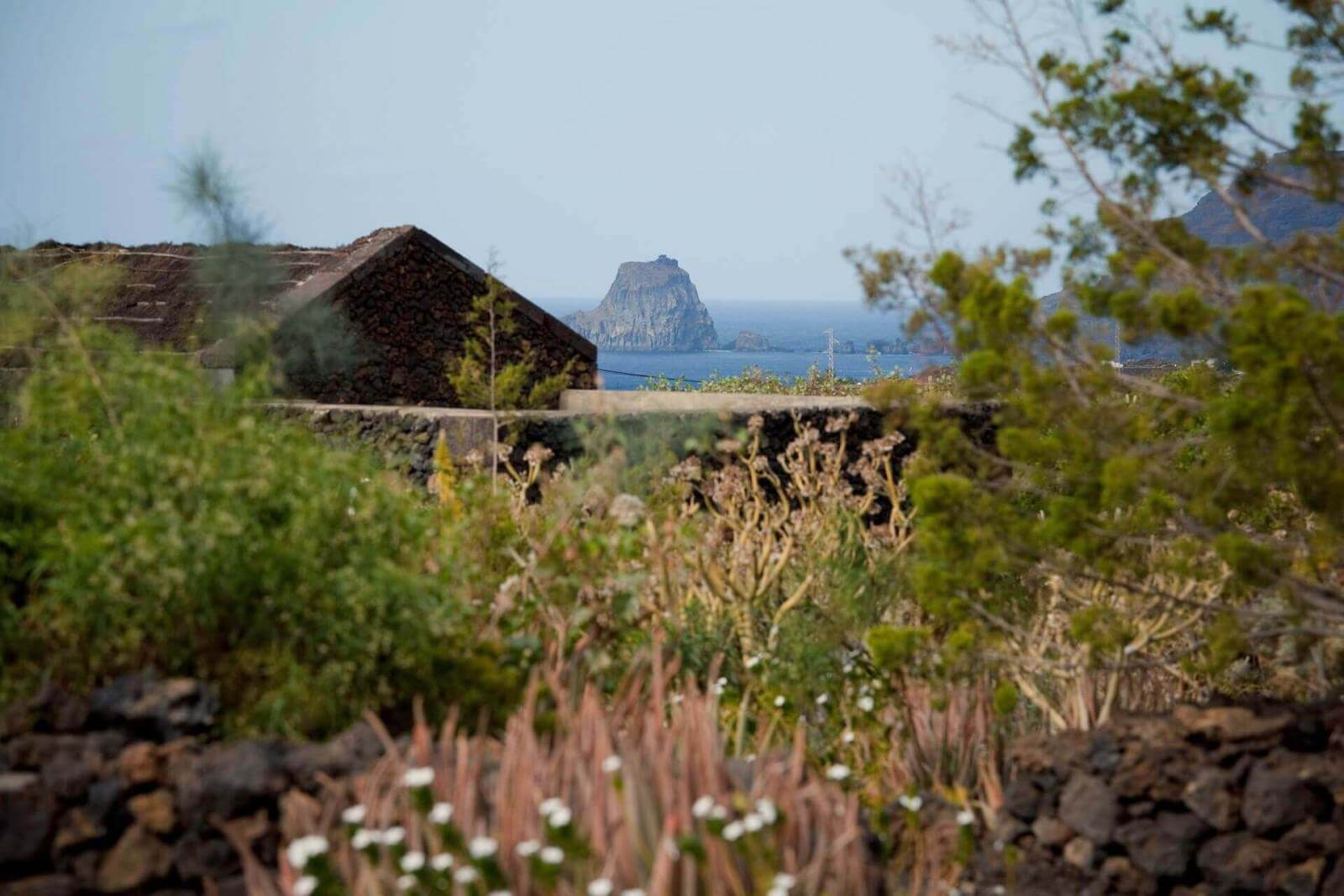
Declared a Biosphere Reserve in the year 2000, El Hierro is home to a huge wealth of natural resources and hundreds of animal species, some of which can only be seen here.
According to statistics, El Hierro has around 12,000 inhabitants. But if we look a little closer, among its landscapes, it is easy to see that its population is actually much larger. Birds, reptiles, fish, arthropods… More than 2,600 species of flora and fauna have been catalogued on the island, including more than 600 species endemic to the Canary Islands and a further 100 that are unique to this island. Who would have thought that 278 km2 could be home to so much life?
The giant lizard of El Hierro, an endangered symbol
Lizards are among the most common and easiest animals to see on the island. But of them all, one stands out as the true king. Its scientific name is Gallotia simonyi, named in honour of the Austrian naturalist Oskar Simony, although centuries earlier they had already been spotted by the French conquistadors, who described them in their chronicles as “enormous lizards as big as cats”. This robust, long-lived saurian can reach 75 centimetres in length when fully grown and live for more than 35 years. It is omnivorous, calm and, like most people from El Hierro, loves the sun, which it enjoys 90 % of the time.
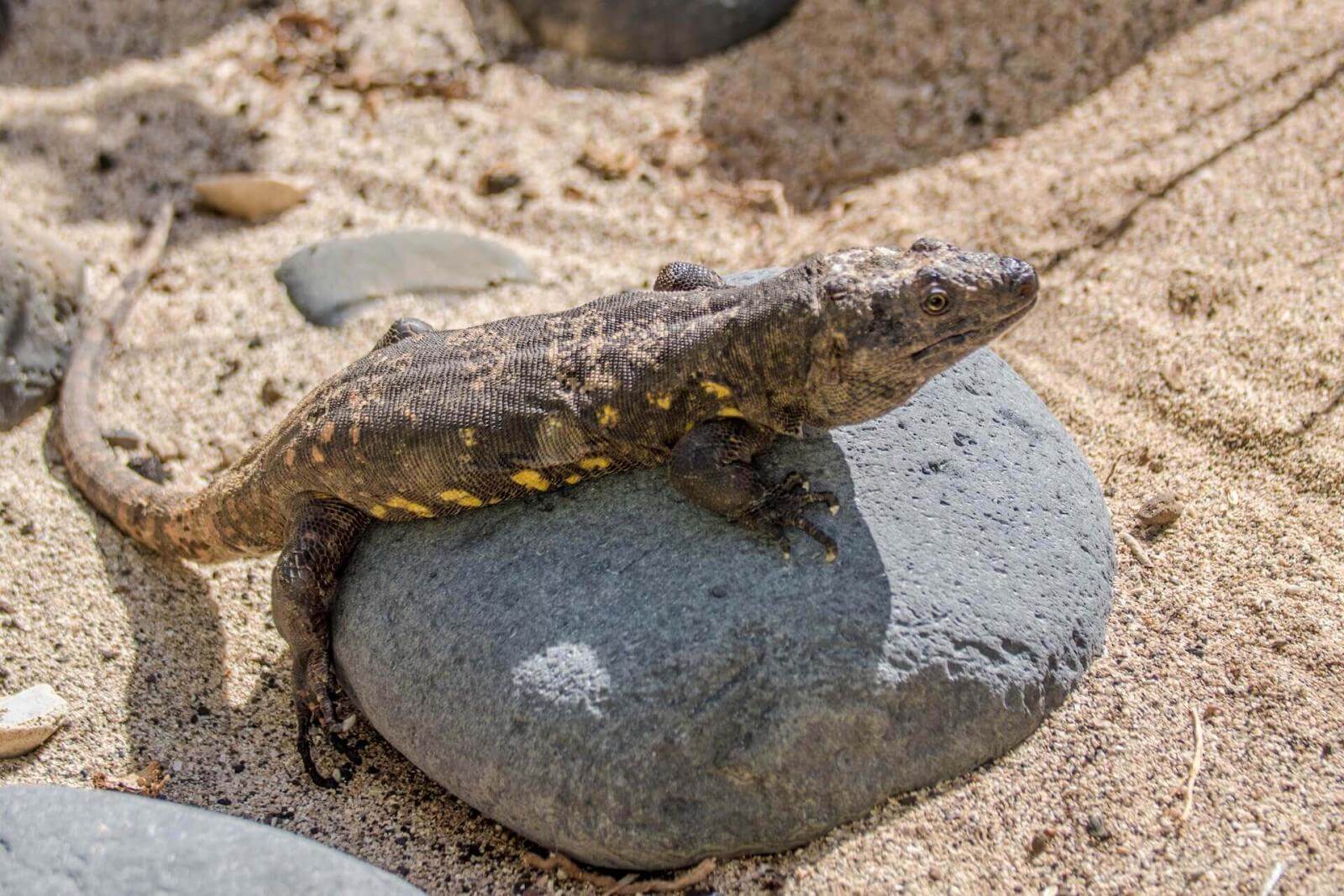
As evidenced by the various fossils found, it once inhabited practically the entire island. However, the arrival of new settlers, the cultivation of fields and the introduction of new invasive species, among other factors, gradually depleted the population to the point of near extinction. It was declared a protected species in 1975 and since then various initiatives and projects have been launched for its preservation, such as the Centre for the Recovery of the El Hierro Giant Lizard, also known as the Lagartario, a recovery centre open to the public and totally dedicated to this mission.
Currently, the El Hierro giant lizard is found in Risco del Tibataje, a Special Nature Reserve located on the northern incline of the island, as well as in Roque Chico de Salmor, a small protected islet very close to the north-western coast. Its presence is scattered, but growing thanks to reintroduction programmes being carried out in different locations on the island that are suitable for its development.
The small, unique perenquén de Boettger
Perenquén is the name given in the Canary Islands to salamanquesas, a genus of geckos commonly found in the Mediterranean basin. However, of the more than 30 species that exist, four seem to have chosen to live in the archipelago. This is the case of the perenquén de Boettger (Tarentola boettgeri), or Boettger’s wall gecko, a small endemic species that uses its scant seven centimetres to hide under the rocks of the island.
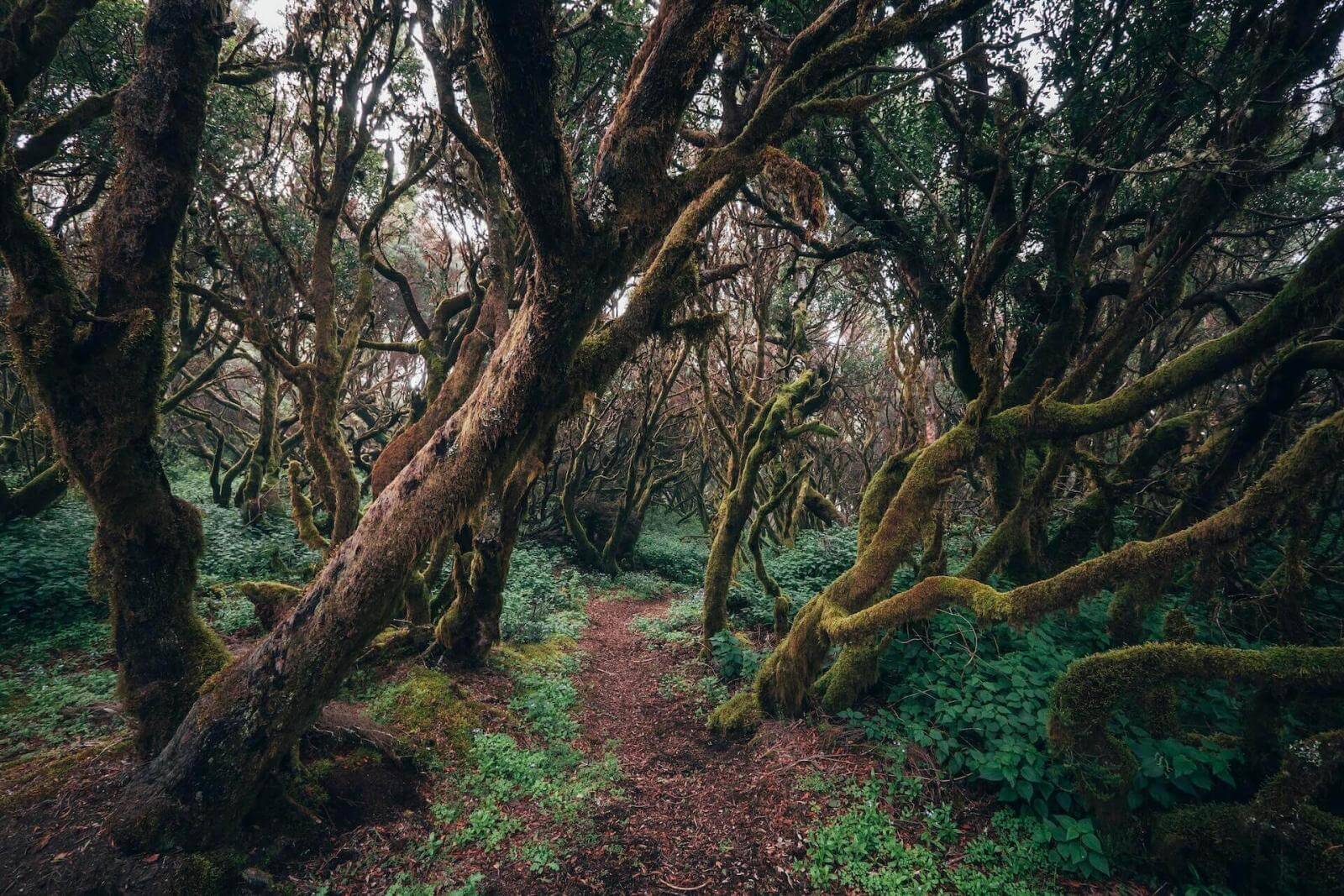
Its great adaptability means it can be spotted, especially at night, in any natural environment, although it is very rare to see it at altitudes above 400 metres or in areas with tall vegetation such as laurissilva or pine forests, where there is a greater presence of potential predators. For this reason and because of its almost unique nature, the perenquén de Boettger forms part of the Canary Islands Catalogue of Protected Species.
A collection of high-flying endemic fauna
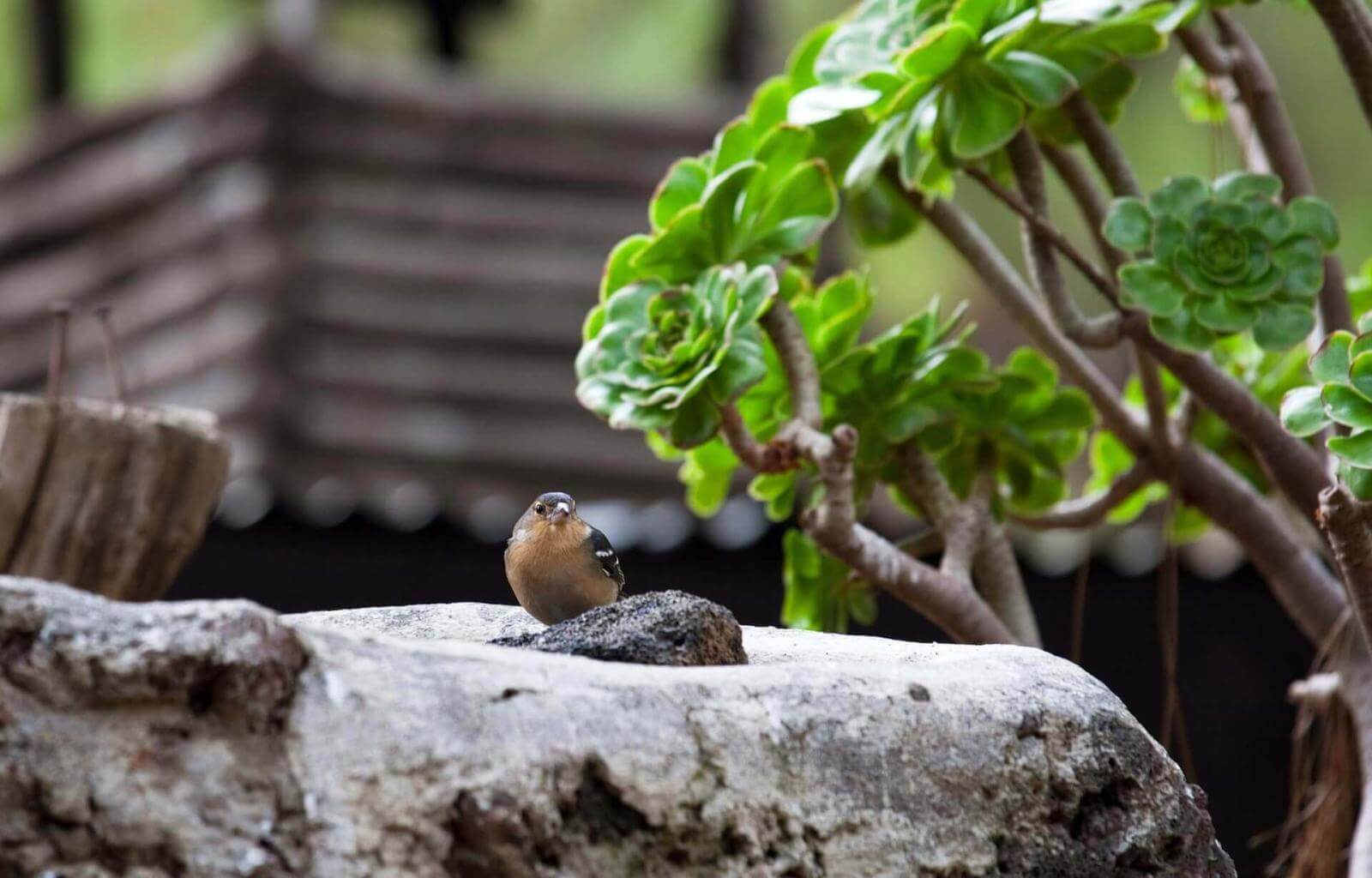
The magnetic beauty that emanates from the young nature of El Hierro tends to capture the visitor’s gaze at ground level. But if you lift your gaze 45 degrees, you can see birds such as the pinzón de El Hierro (F. c. ombriosa), a subspecies that cannot be seen anywhere else.
It is not the only one, however. Up to 40 endemic birds can be spotted on the island, such as the mosquitero canario, the herrerillo canario, or the reyezuelo sencillo canario, one of the smallest birds in Europe which inhabits some forests on El Hierro. Birdwatchers will also be able to recognise the flight of birds of prey such as the Barbary falcon and the osprey and observe rare sea birds like the Macaronesian shearwater or the Bulwer’s petrel in their natural habitat.
Enjoying endemic wildlife through responsible observation
El Hierro not only has amazing nature and wildlife, it also has more than 250 kilometres of trails that enable you to explore freely. However, the fragility of El Hierro’s ecosystem means that this must also be done responsibly.
To enjoy observing species while preserving the environment, it is important to minimise human intervention, which means reducing noise when moving through nature, not feeding or touching wild animals, and always keeping the area clean of waste to avoid damaging unique flora and fauna.
